


Poland in the Rockies: Looking back
Poland in the Rockies? Yes, and from there to wherever English-speaking Poles live, via Cosmopolitan Review.
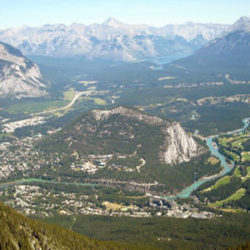
Poland in the Rockies? Yes, and from there to wherever English-speaking Poles live, via Cosmopolitan Review.
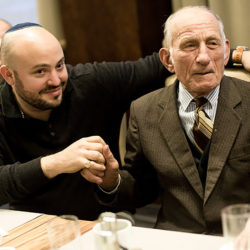
CR takes this opportunity to publish a letter written by Eli Rubenstein, the Canadian Director of the March of the Living and an award-winning educator, to the JTA (Jewish Telegraph Agency) concerning its Dec. 11th article about Polish rescue efforts of Jews during WWII, followed by our own comments.
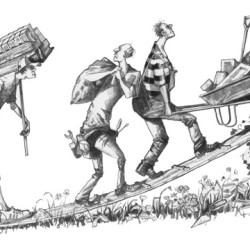
The unflappable, ever courteous Jonathan Lipman was living a life filled with friendship and laughter. Suddenly his daughter asked her mother not to speak Polish in public. You never know where a populist’s hatred will strike next.
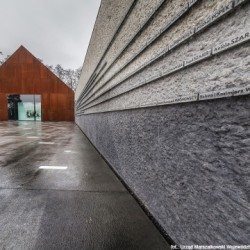
Commemorations hold a special place in national memory; historians have an obligation to protect the emerging social history from being eclipsed. Tom Frydel explains.
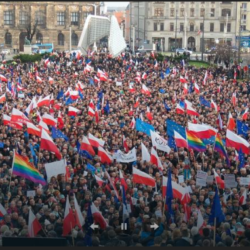
Wanda Koscia’s documentary about the uprising, The Battle for Warsaw, was about a fight for freedom and democracy. The filmmaker now casts a worried eye at Poland’s democracy.
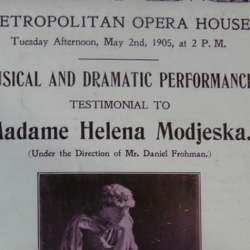
For anyone who missed the grand party at the Metropolitan Opera on May 2, 1905, here is a report from Lynn Ludlow and Maureen Mroczek Morris, who know everybody who is anybody in Polish California.
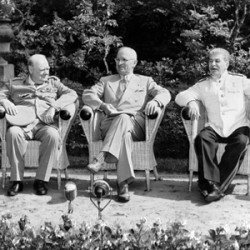
Loss of territory, no reparations from Germany, a dictatorship imposed from abroad, and no safe return for Polish veterans and wartime exiles. In Washington, London and Moscow power and duplicity ruled; honor and integrity collapsed. M.B.B. Biskupski comments.
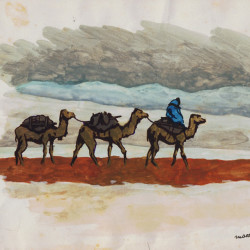
When the Soviets deported Polish citizens from their zone of occupied Poland, the Poles began a journey that would cover several continents and oceans. Among the most amazing is the saga of the children’s odyssey.
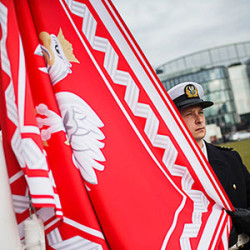
It’s a year of anniversaries, all of them commemorated not only by the Republic, but Poles everywhere. Andrew Nagorski has had a front row seat observing Poland’s successes, and shares his personal reflections.
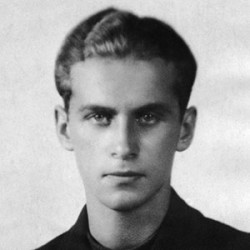
Compared to Keats, Marcel Proust, and even to “Bob Dylan, William Shakespeare, Pablo Neruda and James Dean rolled into one,” Krzysztof Kamil Baczyński was passionate, erotic, heroic, idealistic and incomparably prolific. His life and his art were one, his death made him legend.
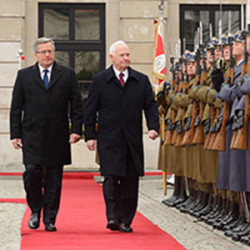
Martin Grzadka is a pragmatic, successful businessman who loves to promote Canada-Poland business. But when he writes about his feelings when the national anthems of his native land and his adopted country were played in the presence of the two countries’ heads of state, well you can almost hear the heartbeats.
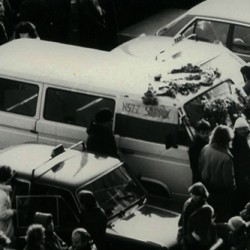
Solidarity brought around a change of power through compromise and a gradual – non-violent – transition. Anna Mazurkiewicz discusses the greatest compromise of modern time and a great model for our troubled times.
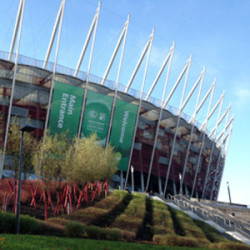
Warsaw, a “green capital”? Indeed, says, Adam Sulkowski, reporting in from the 2013 COP19 Climate Summit in Poland’s vibrant, thriving and – yes, ever greener – capital.
 CR on Facebook
 CR on Twitter
 E-mail CR